Fairy Tales Take a Turn for the Supporting Cast

Jenniffer Wardell published Fairy Godmothers, Inc. in April of 2013. Her take on the world of fairy tales revolves around characters who are normally given the bit parts that help the main characters move forward.

“There’s not really fairy tales for people who don’t fit in,” says Wardell. “I wanted to write something that gave the world’s supporting cast a chance at the spotlight.”

Even though there are many fairy tale adaptations out there, Wardell says that her stories stand out.

“You have never experienced one like mine before,” says Wardell. “It is funny. It is sweet. It’s definitely a new twist.”

Wardell wrote her first book at the age of six about a peacock that goes on an adventure during Halloween.

“When you love stories, there’s never quite enough in the world,” says Wardell. It is important to add your own.

Fairy Godmothers, Inc. can be found at Amazon.com as can Wardell’s story based on the Three Little Pigs called Huff and Puff.

Wardell’s next book Beast Charming is scheduled to be released in February of 2015. In the meantime, fans can find her movie reviews and other articles in the Davis County Clipper and follow her on Blogspot.

This article was originally published at examiner.com in 2013. Links have been updated.

Judy Collins and the Muppets of ‘Sesame Street’

During a difficult time in her life, Judy Collins had fallen prey to alcoholism and was on the edge of a chasm from which there would be no return. She was saved by her friend and fan Jon Stone and the Muppets of Sesame Street. Collins was able to find a reason to keep going; she was able to find an intermittent beacon that brought her back to a safe place full of love and respect.

Continue reading

The ABCs of Creativity: X-factor

Sure, I could’ve gone with xylophone – it’s a musical instrument. I could’ve chosen a multitude of words that begin with “ex” and just shrugged when someone brought up that they actually started with “e” and not “x.” I could’ve gone with someone creative like X. Atencio. Instead, I’m using a hyphen as my cheat code. When I write for the paltry sum of cents per word, a hyphenated word only counts as one and not two words, so “x-factor” it is.

We’re not talking about the TV show, which focuses on singing skills and offers biting criticism rather than providing a critical view. However, we are talking about where the name comes from; the x-factor in creativity is the talent that you have naturally. You are creative, but your beginning talent level will naturally be different than someone else’s creative talent level. You can’t do anything about that.

You can, however, change how much work you put in to cultivate your talent. Hard work can beat talent as long as you’re willing to overcome your natural limits and improve your mind and work effort. Following a plan, engaging in creative acts, and continuing to learn about the world around you are all acts that will help you improve your creativity. Unlike physical talent, creative talent has no ceiling. Work on your ability, and you’ll watch your x-factor grow.

For more on creativity, join our Patreon. Get “Disneyland Is Creativity.” Buy “The Haunted Mansion Is Creativity.” Read “Penguinate! Essays and Short Stories.”

Our Traveling Penguins: Penny and Patch

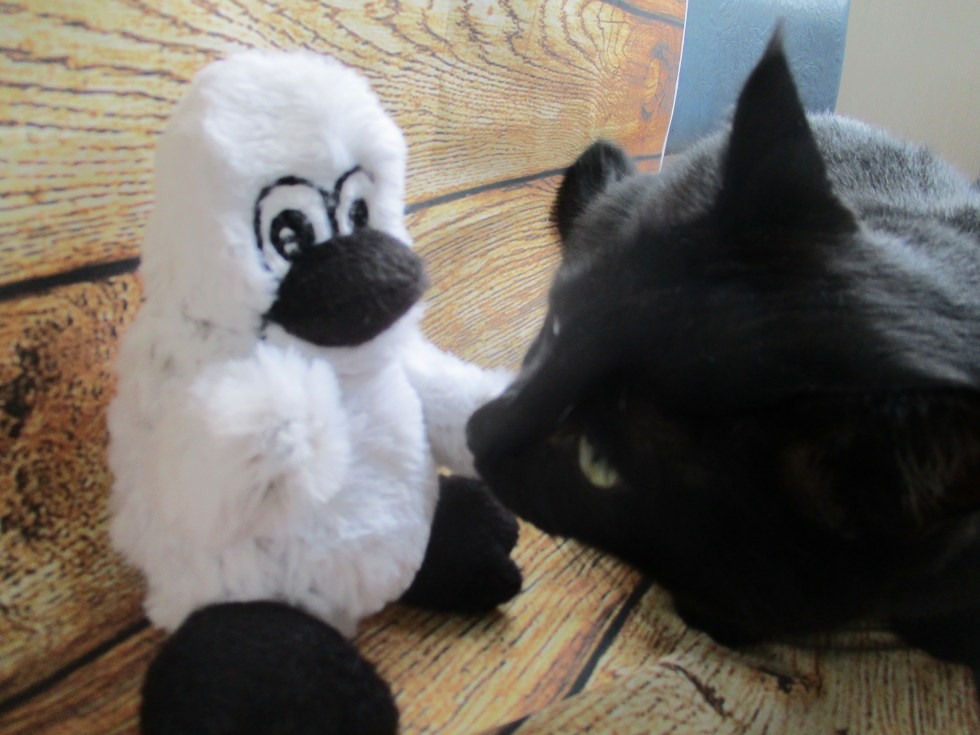
My wife and I love to travel. We don’t get to do it as often as we like, but when we do, we make sure to take along our two traveling penguin companions – Penny and Patch. They’ve help us meet other people who are bringing their own stuffed friends along, and we’ve found adventures and fun in the most unexpected places, inspired by our penguins.

Penny Penguin in Hawaii

Penny has been traveling with us the longest. The problem is that she likes to fly. It’s okay if it’s in a plane, but it’s much better if it’s under her own power. Fortunately, she’s tough, and she hasn’t flown too far away from any of the photo sights. We have to keep an eye on her though because she won’t miss an opportunity to leave the ground.

Patch Penguin The fish was this big!

Patch is our hungry penguin. He loves to eat almost anything, but he always has his eyes set on fish “this big.” Patch is also telling the other penguins in our rookery stories about what he’s seen, what he’s done and what kind of fish he wants most.

You can see the adventures of Penny and Patch on our Instagram. Or you can check out, Checkers Penguin who has his own Instagram; he’s into food, fingernails and lives in New Zealand.

If you want a traveling companion, you can get one of our handmade stuffed penguins. They’ll come with a passport, so their ready to go anywhere. If you want more penguins in general, join our Patreon or you can give the gift of a penguin with our Pay-It-Forward Penguin program.

Heroes of the Haunted Mansion: X. Atencio

Perhaps the most famous story involving X. Atencio and his creativity comes from his work on the Pirates of the Caribbean. In an interview with ParkHoppinPartyGuys, Atencio said that he was brought in by Walt Disney to write the script for the attraction. Atencio had no experience writing scripts, but he said “All right, Walt, whatever you say.” He wrote the auction scene first and showed it to Walt, who told him to continue. However, this wasn’t Atencio’s last or most well-known first.

At the last script meeting, Atencio said he thought that the pirate attraction needed a song. He told Walt his idea, and Walt thought it was great. He said do the music with George Bruns. Atencio had never written a song before, but he came up with “Yo Ho (A Pirate’s Life for Me).”

His next Disneyland project was the Haunted Mansion. He worked with Marc Davis and Claude Coats to come up with a script. He also wrote “Grim Grinning Ghosts.”

When someone asks you to do something outside of your comfort zone, especially if it’s creative, do what X. did, say “yes” and get to work.

Sources: “The Haunted Mansion: Imagineering a Disney Classic” by Jason Surrell.

“Disney Legend Interview: X. Atencio” by ParkHoppinPartyGuys at https://youtu.be/QeDH9S17WzU

For more on creativity and the Haunted Mansion, get “The Haunted Mansion Is Creativity” online or at the Candy Cane Inn in Anaheim.

For more on Disneyland and Creativity, order “Disneyland Is Creativity.” For deep thinking about the Disney Company, check out “Penguinate! The Disney Company.”

You can also find more articles about Disney, Disneyland and creativity at our archive website, www.penguinate.weebly.com, and on our blog. If you would like to get even more articles about creativity, join our Patreon and become a Penguinator.

Why Judge a Book by Its Cover but Not a Person by Appearance

The old adage “never judge a book by its cover” is usually used to explain why we shouldn’t judge people by the way they look or dress. While it makes for a nice metaphor, it is literally wrong, and it highlights one of the basic ways that people see the world.

Literally Wrong

A good book cover is created to entice people, who will enjoy the book, to read it. It doesn’t make sense for the cover to mislead readers because the book will get bad reviews and the author will lose credibility. Romance books use romance covers, so romance readers know what they are getting and those that dislike romance stay away – the same is true of every other book out there. It’s okay to judge a book by its cover because the cover should lead you to an expectation of what you’re going to read. Fulfilling that expectation will lead to a better reading experience and cause you t gravitate to the author’s other works. If you couldn’t judge a book by its cover, which includes the summary on the back, you probably wouldn’t bother spending the $8 to $30 on a copy only to find out three pages in that the book isn’t what you expected or wanted.

How People Judge

Human beings judge everything by the way it looks. Fruits are grown and bred for their appearance rather than their taste. Cars are purchased based on how they look, and how those looks will affect the perception of the driver, rather than how they perform or how practical they are. People spend billions of dollars every year on make-up, plastic surgery, hair dye, and body modifications, and they are judged by others based on how they look.

It’s a basic tenet of human nature that we judge those who look like us as better than those who look differently. This basic tendency is why there’s institutional racism and sexism. The people who do the interviewing are more comfortable with hiring someone who looks like him or her, and they will base their decision on their gut instinct without examining why the instinct is there or what it’s really telling them.

While it is perfectly fine to judge a book by its cover, people aren’t books and should not be judged by how they look. We’re all still going to do it because it’s a built-in survival mechanism. When something confirms our biases, we’re going to place more emphasis on those incidents than on the events that contradict what we believe internally. Even with clear and rational observation and logic, we’re still going to tend to fall back into our old habits and instincts that don’t serve us anymore. We need to be vigilant and courageous to stand up to our own prejudices against those who are different from us. Until we can face our own shortcomings and know our own beliefs, we will continue to fall into the trap of judging people by how they look instead of by what they do.

Want more of this type of content? Join our email list or Patreon.

No Solution is Acceptable for Mass Shootings; What Do We Do?

I don’t even know where to approach this from. There just isn’t any logical place to start with. What do you do when someone shoots up a garlic festival or a Wal-Mart? That’s where my thoughts end because there doesn’t seem to be anyway to stop it that is acceptable to half the population.

Take Guns Away

We don’t want to take away guns because they are a God given right. It says so in the Bible and is confirmed in the 2nd Amendment, which is more revered than the 1st Amendment, and which ignores the whole “well-regulated militia” part of the text. Besides, taking guns away won’t keep them out of criminal hands.

In school when a kid did something bad and the teacher couldn’t tell who it was, she punished the whole class. Everyone lost their recess privileges. Still, recess isn’t a part of the Constitution, so we’re back to where we started.

Get Better Mental Health

So, if “guns don’t kill people, people kill people,” then we should get people serious mental help. Psychologists and psychiatrists should be a free resource that anyone should be able to avail themselves of. There should be no barrier, money- or perspective-wise, to getting mental health. But we can’t do that because it isn’t society’s responsibility to care for its own citizens. Besides, paying for mental health care sounds even worse than paying for everyone’s physical healthcare. At least, physical problems we can see and make sure people aren’t faking. What would we do with socialist mental health care?

Clean Up Hate Speech

We could try to stop hate speech at the highest levels. By blaming the “other” and making them “rapists and murderers” intent on taking our jobs and causing the economic collapse of the American capitalist system, certain persons have created a boogeyman that is both nebulous and specific. It’s the Hispanics, the Latinos, the Muslims, those with brown-skin are at fault, and white males are ready to take out their guns to shoot whoever happens to be in the way. Bonus, if you’re a white shooter, you’re less likely to be killed than a member of another race, unless you take your own life. These factors are repeated ad infinitum until some crazy people (who can’t or won’t get mental health help) go ballistic. Unless we can see every race, religion, gender-identity, pick a trait, as human, we will continue to churn out people who are willing to kill the “pests” in our society as they are named by our leaders.

If we take away a person’s right to call other people names, then we are taking away their freedom. They have a right to assert that brown people are at the core of all our problems, and we’re just being intolerant of a point of view that is protected under the Constitution. The Constitution gives us rights. With those rights come great power, and with great power comes great responsibility. You can say racist, hurtful, ignorant things, but you shouldn’t – even if you think them, even if you believe they’re true. “Do unto others as you would have them do unto you” doesn’t exclude any person on this planet. Basing your actions on a person’s appearance is ignorant and idiotic. Ted Bundy was reportedly attractive.

It’s our duty to be intolerant of points of view that are advocate diminishing the personhood of any human being. It’s our duty to stand up to those who would abuse their rights and use them for evil. It’s our duty to make sure that people understand the difference between facts and stupid opinion and feigned outrage positioned as pseudo-supported editorializing. If someone is shouting “the truth” at you and you’re getting angry because it sounds like you’re being taken advantage of, it’s not the truth. Not all anger is righteous, and much of righteous anger isn’t accompanied by shouting into a television camera.

No Single Solution

Even if any of these were enacted, none of these alone will do the necessary work. Worse, these are the first things that people rally against, even before the barrel of the gun is cold. They don’t offer solutions first, they just say what we cannot do, as if the Constitution has never been altered – as if the Bill of Rights itself wasn’t an alteration. But they do not offer solutions.

Thoughts and Prayers

Instead, they offer their useless thoughts and prayers. Thoughts and prayers about what? How do they help the dead 6-year-old and 13-year-old? How have they helped over the past 6 years or longer. Thoughts and prayers don’t do shit. But they are the last refuge of the person too enthralled in the NRA, too enthralled with his or her own wealth, or too stupid to see what’s going on. Thoughts and prayers without action are dead – just like the victims of the gun violence that brought them on and the souls of those who are decidedly against protecting the lives of those who they have sworn to protect.

Everyone Should Have a Gun

Some advocate for giving everyone a gun. Society was much more polite when people could meet out on the street at high noon and shoot each other because of a perceived slight or because they wanted to see who was the fastest draw. They fail to recognize that in the shooting of a suspect in New York, eight bystanders were injured – all of them by the police officers who are supposed to be trained with the weapons they use. The criminal didn’t shoot anyone.

Everyone Should Be Educated

Alternatively, they say there should be gun training in schools. This would be great. It might only be a partial solution, but if every child knew what a gun was, how it worked, and what it could do to other people, animals, targets, an argument could be made that there would be fewer accidental deaths in the homes that have guns. It might even work later in life for these young, white men who perpetrate these horrible crimes. But we can’t even get schools enough funding to take care of the core elements, like math, science and English. How are we going to afford gun education for every child in the U.S.? More importantly, when will it fit into the day?

Still No Solution

Education is not a panacea. It doesn’t cure everything. There are plenty of educated people who have subverted their education and decided to support the cigarette industry by denying the danger of smoking. There are plenty of educated people who have embraced tenets that are reprehensible in light of their education. Educated people can be racist, elitist, and dumb. They can choose to see poverty as a choice rather than as the systemic problem it is. Maybe, it can be a part of the solution, but by itself, unless it changes behavior, education isn’t the be-all, cure-all.

Back to the Beginning

So, what’s the solution? Until the two sides of the issue are willing to come together and discuss the issue without taking possible solutions off the table, we’ll always be where we are now. People getting shot and killed every day; some of those shootings will be mass shootings that will allow politicians to send their thoughts and prayers and 14 minutes later they can tweet well wishes to their favorite fighter. So, sit back on your couch, turn up the noise on the TV and shut your heart to the hurt of your fellow Americans. Once we’re all dead, God will sort us out. And He’ll probably wonder what we found so hard about loving our neighbor, and what was so hard about knowing He is Love and we were created in His own image.

The Top 8 Movie Penguins

Penguins should have more movies. They’re funny, cute, and always ready for a hug (especially the handmade variety available here). Here are my picks for the top 8 movie penguins.

Pablo the Cold-Blooded Penguin. Released as part of “the Three Caballeros” in 1945, Pablo is a penguin who doesn’t like the cold, so he conspires to get away from the cold weather to get to the warmth.

Chilly Willy’s first animated short wound up on the big screen in 1953. Like Pablo, Chilly Willy doesn’t like the cold either. That doesn’t mean that Chilly was copied from Pablo; it’s possible, but it’s equally likely that a penguin who doesn’t like the cold is funny. Chilly Willy had a longer run than Pablo and lived to be seen on Saturday Morning Cartoons regularly. He also has a memorable song.

Penguin from the Batman movies is the ultimate bad guy. Burgess Meredith probably played the best version of the penguin as dapper villain with a squawking laugh; Danny Devito was also memorable for his disgusting and more penguin like villain in “Batman Returns.

The Madagascar Penguins have had a heft run that includes four movies including one of their own. This team works as comic relief with their pseudo-military organization.

Mumble is a penguin who doesn’t have a heart song. Instead, he has “Happy Feet.” Fortunately for the penguin colony and the Earth, his happy feet get him international attention and spark a worldwide debate about the fate of penguins and global warming. (Even those, who have a vested interest in keeping the status quo over making life better for everyone, are represented in the argument that follows.) Most of the film Mumble spends as an outcast in search of meaning; then he gets what every outcast wants, acceptance and a leadership position in his colony. The messages in the film overlap, and it’s an interesting juxtaposition of new creativity versus old creativity. Plus, there’s a kickin’ soundtrack and Robin Williams.

Wheezy’s appearance in Toy Story 2 was enough to set off the events of that film. He triggered Woody’s insecurities while putting Woody in a position to get stolen from a yard sale. Being part of a billion-dollar franchise is nothing to, uh, wheeze at. Wheezy also appeared briefly in Toy Story 3.

Mr. Popper’s Penguins was a mediocre movie based on a book that was better. At least the penguins got to wreak havoc on Jim Carrey.

Billy Madison’s giant penguin hallucination is funny and a little freaky.

Honorary Penguin: Benedict Cumberbatch – any actor, whose work is pronouncing words and who can’t say penguin, deserves this honorary position.

Which penguin is your favorite? Which one did I miss? Let me know in the comments.

Do You Know This Reason for the Brilliance of ‘Sesame Street’?

In the late 1960s, the Children’s Television Workshop and the Public Broadcasting System (PBS) revolutionized children’s television. Sesame Street was released in 1969, and it was focused on using the still relatively new medium of television to educate children. They focused on preschoolers living in poor neighbors. Because PBS was publicly funded, Sesame Street didn’t have to cater to the needs of corporations. It didn’t have to sell cereal or toys to kids or have them ask mommy about getting a new car. All Sesame Street had to do was prove that television could be used to teach children.

Before Sesame Street educational television was pendantic, boring, and colorless. People with children knew that their kids were captivated by TV and capable of learning the jingles of popular commercials. The creators of Sesame Street hypothesized that if children could learn jingles from television, they could also learn their letters and numbers. Targeting the inner city made sense because those children had the fewest opportunities to attend preschool.

Even in the late 1960s, people realized that it was important for children to see themselves represented on television in positive ways. Sesame Street went out of its way to cast women, men and children of diverse backgrounds. As the phenomenon of Sesame Street grew so did its inclusiveness. By 1979, Sesame Street had a cast that included actors who were Latino, black, Native American, and deaf. They included a child with down syndrome, whose parents were told at the time of his birth that he would never be anything and it would be better for him to be put in an institution.

Fortunately, for her son and everyone who watched Sesame Street, Emily Kingsley and her husband didn’t listen to the doctors. Instead, they raised their son and got him on Sesame Street.

“[Kids] need to see themselves, all the people who feel this sense of strangeness and separateness, who need to have that strangeness eradicated” need to be represented, said Kingsley.

That was part of the brilliance of Sesame Street. It brought people together and showed the youngest Americans a vision of what an integrated society could look like if we just have the courage to see each other as we all are – the same, even in our differences.

Source: “Street Gang: The Complete History of Sesame Street” by Michael Davis