For a variety of reasons, my family and I couldn’t make it to the D23 Expo 2019 this year. But since it is a Disney event, I feel confident that it’s okay to dream about being there. So, here are the panels and events I would most like to do if I were able to go.
Friday, August 23, 2019
While most people would hit the Disney Legends ceremony, and
it is always spectacular, I tend to opt for an easier seat at another panel.
This year would be different though. I would head to the Disney Legends
ceremony and bask in all its glory. If for some reason, I couldn’t get into the
Legends ceremony, I would head to “Great Moments with Walt Disney” and “At Work
with Walt.” Both would be interesting, and they’re back-to-back at the Archives
Stage where I spent most of my time in 2017.
I would then head over to the Disney+ Showcase because we
all know I’m going to sign up for that as soon as I can. People at D23 who sign
up for the streaming app will get a discount and become Founders, so that would
be something I wouldn’t want to miss. I have my D23 Charter Membership, I would
want to make sure I get the same thing with Disney+. This presentation may not
allow me to sign up for it, but it would give me a better idea of what’s in
store.
Then I would hustle back to the Archives Stage to see if there was space for the “In Search of the Swiss Family Robinson Treehouse” panel. That would give me about an hour on the floor to see what books are available to make sure to stop by the Sweep Spot booth to pick up their new book with autographs!
Saturday, August 24, 2019
This is another of those days when I should probably hit the big panel, but I don’t actually want to know about films before they come out. I like being surprised. Saturday morning is still jampacked, so there’s no way to go wrong with the panel choices, and in this case, it’s a toss-up for me. Do I go see “Women of Impact: Meet the Nat Geo Explorers Changing the World” or do I go to “Digging Deeper: Uncovering Disney’s Hidden History?” Nat Geo could be inspirational and provide actionable ideas on how to change the world for the better, but I love Disney history. I would probably have to discuss the panels with my family, but today, I am leaning toward the History panel. It’s at the Archives Stage.
The panel of the day would be “The Haunted Mansion: Celebrating 50 Years.” Considering the book I wrote in celebration of the Haunted Mansion and that it’s my favorite attraction of all time, this would be my “not miss” panel of the day. It’s at 12:30 and at the D23 Expo Arena.
From there, I would head over to the Archives Stage to see “Ken Anderson’s Haunted Mansion ‘57: A Year of Horror, Humor and… Voodoo?” Ken Anderson is one of the heroes of the haunted mansion, and he paved the way for the attraction we all know and love today. It starts at 3pm, so I should have plenty of time to get there. The next panel I would like to see is in the same place. “Collecting the Creepy: 50 years of Haunted Mansion Merchandise” would be right up my alley.
The last panel of the day would be “Travels with Marty: A Conversation
with the Sklars and Imagineers.” It’s on the Archives Stage as well. That
leaves about an hour to look at the floor booths and get my Indie book buy on.
The only other panels on Saturday that give me pause for thought are the “Secret Walt Disney Company Project,” which could be anything! ANYTHING! (and will be announced on August 22), and “Marvel Comics: Marvel 80th Anniversary.” There’s a good chance that people going to the latter will get some sort of comic book out of the deal. No guarantee, just a good chance.
Sunday, August 25, 2019
The morning’s “Sneak Peek! Disney Parks, Experiences and Projects” is sure to be crowded and to be the premiere presentation. If I could get in, it would be my first choice. It would also mean missing out on “Heroines of the Disney Galaxies Presented by Box Lunch” and “Marc Davis in His Own Words – Imagineering the Disney Theme Parks” or “Hidden Gems of the Walt Disney Animation Research Library.” All three of these panels will be amazing. Marc Davis was essential to bringing humor to the Jungle Cruise, Pirates of the Caribbean and the Haunted Mansion. Imagine what could be in the research library… Yeah, it’s like that. Still, I would try for the Sneak Peek first.
Between the Sneak Peek and the next panel, I would probably
have a little time to get on the floor and go through one or two of the
presentations. I would want to see the Haunted mansion D23 Design winners up
close and in person.
Then I’d head to the Archives Stage for the 2:30pm “50 Years
of the Walt Disney Archives: A Gold Mine of Fun Finds,” and after that in the
same place would be “Magic Journey: Tale a Fantastical Ride with Imagineer Kevin
Rafferty.” Though I would also think about “The Art of Disney Storytelling”
because it fits with what I would like to do for a living. Because of the time
conflict, I’m leaning toward the first two.
The last panel of the day would be “Disneyland ’59: Matterhorn,
the Monorail, and Submarine Voyage.” If the floor was still open after that, I
would make one more pass to make sure I got what I wanted. If any of these fell
through, the Center Stage has “Marc Davis and the Masters Behind the Haunted
Mansion” from 4:45pm to 5:15pm.
At any convention, there are always tough choices to make. D23 Expo 2019 is no different. The Expo is sold out, but D23 did announce that they will be streaming certain panels. I may be able to settle for that depending on which they choose and what time they are as compared to my time zone. To those that will be there: Have a magical time and think about getting me a souvenir!
The Walt Disney Company has been considered powerhouse in creative endeavors. With its innovations in animation, movies and theme parks, people associate the Disney brand with creativity. So, aside from my two books, “Disneyland Is Creativity” and “The Haunted Mansion Is Creativity,” what are the best books about Disney and its creative process? Here are my Top 8:
“Brain Storm: Unleashing Your Creative Self” – Don Hahn
gives readers practical advice for getting more creativity from life. He uses
his life experience and his work at Disney to provide some of the best insights
and most fun stories for creativity.
“The Imagineering Way: Ideas to Ignite Your Creativity” –
The imagineers explore creativity principles and provide examples on how to add
more creativity to your everyday life! Use it in conjunction with “The
Imagineering Workout: Exercises to Shape Your Creative Muscles” and get your
creative muscles in shape.
“The Imagineering Workout: Exercises to Shape Your Creative
Muscles” – The imagineers give you some exercise to improve your creative
output in this companion book to “The Imagineering Way: Ideas to Ignite Your
Creativity.”
“One Little Spark! Mickey’s Ten Commandments and The Road to
Imagineering” – Marty Sklar leads us on an exploration of the rules that
imagineers follow to come up with and implement their ideas. Go inside the idea
process with the experts at the Walt Disney company.
“Creativity, Inc.: Overcoming the Unseen Forces That Stand in the Way of True Inspiration” – The section on Steve Jobs makes this book about Pixar and creativity worth the read. Ed Catmull does an outstanding job with this story of the Pixar Studios. Read my review at our archive website http://www.penguinate.weebly.com.
“Dream It! Do It! My Half-Century Creating Disney’s Magic Kingdoms” – Marty Sklar was a prominent imagineer who got his start writing for Disneyland before the park opened. “Dream It! Do It!” is Sklar’s autobiography as it relates to his work with the Walt Disney Company. Check out the review at our archive website http://www.penguinate.weebly.com.
“How to Be Like Walt: Capturing the Disney Magic Every Day
of Your Life” – Pat Williams takes an honest and positive look at Walt Disney’s
life. Williams pulls out creativity principles using Walt’s biography as the
basis for illustrating those principles.
“Walt Disney: An American Original” – Biographies are a great way to get inspired and to dig into what made someone creative. Bob Thomas’ seminal work on Walt Disney was released not long after Disney’s death. It is one of the most accurate portrayals of Walt’s life and how he accomplished what he did. Start here before looking at the more modern biography by Neal Gabler.
Tell us which book on Disney and creativity is your favorite!
In improv comedy, you never want to shut down the person you’re
on stage with. Even if you have no idea how something is going to be funny, you
need to take what you’re given and add to it. The phrase is “Yes, and…” Because
improv is creative and difficult enough, negating someone’s idea will shut down
the comedy as it destroys the other person’s confidence.
Walt Disney knew instinctively that creativity came from the
“Yes.” People who said “no” were always looking at how not to do things and
that’s what they would end up doing – nothing. When Walt proposed something that
sounded crazy, the answer was always “Yes.” Sometimes, there was a qualifier
and the answer was “Yes, if…” People who said “No” to Walt often found
themselves unemployed.
When creating the effect for the Rainbow Caverns, Heinz Haber told imagineer Claude Coats that it would be statistically impossible to keep the colors separate form each other. They would be gray within a week. When Coats relayed Haber’s assessment to Walt, Walt said, “Well, it’s fun to do the impossible” (according to MiceChat). Walt trusted his people to find a way to accomplish the impossible because he believed in the power of “Yes.” As long as someone thought they could or they thought that Walt thought they could, they usually did.
As a Penguinator, does it make sense to be critical of
Disney California Adventure (DCA)? No one at the Disney Company is likely to
read this post and think, “Oh, yeah, we did forget that,” or “Schnikey! We need
to fix that ASAP,” especially if I were to leave this post private and for
Penguinators only instead of giving you an advanced viewing opportunity. I
don’t have any Disney employees on my Patreon list that I’m aware of, and I’m
decently certain there aren’t any that visit my blog. Even if there were, the
company is notorious for not accepting unsolicited ideas from outside.
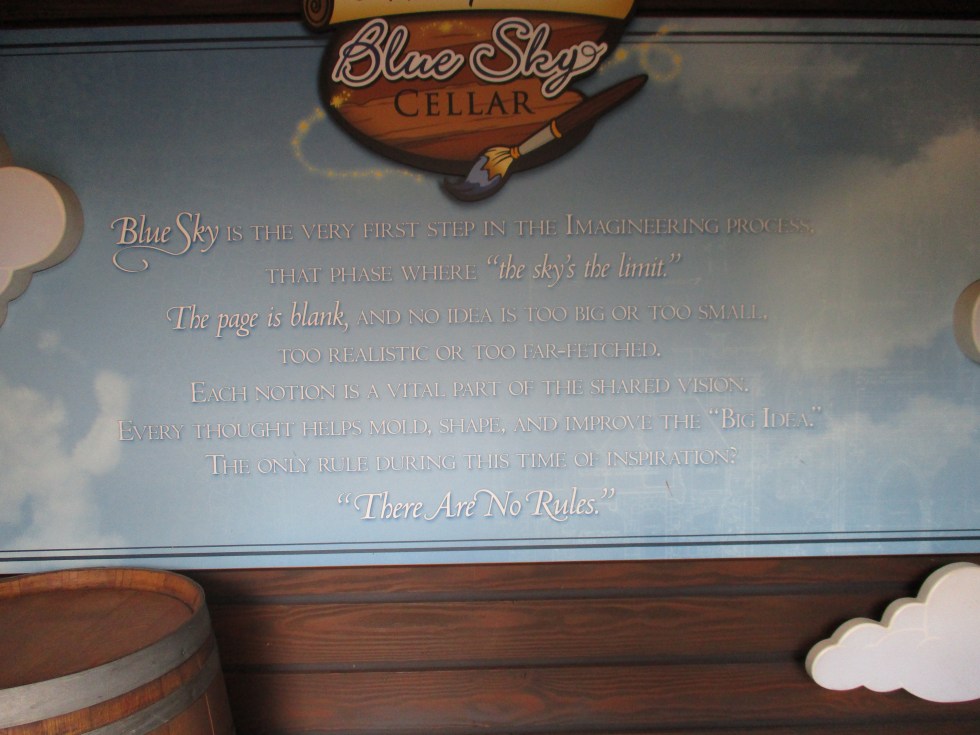
Besides, anything I say has already been said by someone else and probably thought of by the imagineers. Still, as a mental exercise to improve creativity, looking at DCA provides the opportunity to unleash the judge, find what’s wrong with the current park, and figure out how to make it better. Imagineers can talk about the idea of Blue Sky thinking where everything goes and there are no rules, but in the end, they are constrained by the park’s current footprint and the bean counter’s budget, which would include the opportunity cost of any major renovation that would significantly change the park. We have no similar constraints if we choose to offer up possible solutions to the DCA problem. We can truly engage in Blue Sky thinking without reference to financial consequences, thinking only about what’s wrong with DCA and what would make the park better.
Where’s the Theme, Park?
Disneyland changed the amusement park industry by, among
other things, theming itself and its lands. Walt Disney established early on
that spacemen and cars don’t go into Frontierland, and the cowboys stay out of
Tomorrowland. The sightlines were created so that people viewing a building on
Main Street, U.S.A. would see a different roof than they would see when viewing
the same building from Adventureland.
The berm with its train and trees was devised to keep the
rest of the world from interfering with the guests’ ability to suspend
disbelief. When coupled with the negotiated rules that Anaheim passed for
buildings outside the park, guest don’t see anything that Disney doesn’t want
them to see (beyond the occasional plane or helicopter flying overhead). Even
with Tomorrowland’s current shortcomings (there are plenty of them) and the
addition of Star Wars: Galaxy Edge, Disneyland is all about theming – right
down to the dolls making the popcorn in the popcorn carts.
As ill-conceived as it may have been to put a theme park
about California in California when a majority of Disneyland visitors are from
California, DCA was themed appropriately when it opened. The Sunshine Plaza was
upbeat and California themed through and through. Hollywood Backlot Studios had
the glamour of the 1930s. Golden State celebrated the architecture of the Bay
Area, and Paradise Pier took its cue from the Beach and Boardwalk parks. Condor
Flats took on California’s aviation history, and Grizzly River Peak with the
neighboring Redwood Trail were a tribute to California’s north. The park may
not have been good when it opened, but it was themed.
Unfortunately, the theme wasn’t the right one, and the
Disney Company had to come up with ways to get people to spend their money to
go over to their second gate. Bug’s Land was added to appeal to youngsters. Not
really California themed, but it didn’t intrude on the rest of the park, and
there were bug’s in California. “Twilight Zone Tower of Terror” was built in
the backlot; the perfect place for it. As a hotel from Hollywood’s glamor days
of the late 1930’s, the Tower of Terror fit in with the rest of the theme.
When “Monsters, Inc.: Mike and Sulley to the Rescue” opened
in 2006, it signaled the beginning of the end for DCA’s theming. Placed in
Hollywood in the same area as the defunct Superstar Limo ride that lasted less
than a year; Mike and Sulley weren’t (and still aren’t) Hollywood themed. Still
the monsters occupy a prominent place in Hollywoodland as one of the two rides
in the area – the other one being the Tower of Terror.
In 2008, Paradise Pier saw the opening of the beloved Toy
Story Midway Mania. Set within the games of the pier, Midway Mania could be
forgiven its intrusion; even if its story, guests being shrunk down to the size
of toys so they could play the game, didn’t fit with the theme, the game
element of the attraction worked. With Mr. Potato Head playing the Midway Mania
Barker, the Toy Story characters didn’t do much to detract from the theme
though no self-respecting boardwalk would have such a sophisticated game during
the time that Paradise Pier was supposed to reflect. (And let’s face it, Midway
Mania is one of the best attractions in either park.)
Other rides on Paradise Pier were rethemed over the next
three years to include Disney characters. Mickey’s Fun Wheel received a new
paint job and a giant Mickey Head. The Orange Stinger became the Silly
Symphonies Swings and Mullholland Madness became Goofy’s Sky School. Within the
singular concept of the ride, the retheming of the last two was brilliant. The
Silly Symphony Swingers opens up to reveal a painting of Mickey Mouse
conducting the band from “the Band Concert,” which isn’t from the Silly
Symphony series (highlighting the theming problem again). Still, the use of the
whirlwind cartoon on the swings support pole is a great idea. Goofy’s Sky
School is just “plane” fun. The problem is that none of the changes align with
the area’s theming at the time, and these rides are exactly that – rides – not
attractions. These are off-the-shelf, experience-them-at-your-local-carnival
rides.
While hyped tremendously as a new attraction for the park, Ariel’s Undersea Adventure quickly became DCA’s version of Snow White’s Scary Adventure. At seemingly twice the size and half the fun, this show-stopping, audio-animatronic disappointingly doesn’t carry the story far enough or strongly enough. Still, it’s routinely 5-minute wait time makes it a nice place to take a break from the heat, and it features some interesting advances – the descent into the sea and the Ursula figure. It’s still in the wrong place. The Little Mermaid has nothing to do with California or Paradise Pier.
In 2012, DCA attempted to keep with the California theming
and connect to its mythical beginnings. Missing a golden opportunity to
capitalize on its largest changes, the park turned the Sunshine Plaza into
Buena Vista Street of 1923, the time when Walt Disney arrived in California
with a suitcase and a dream. The Carthay Circle Theater was opened and fit in with
the Tower of Terror in the background, but Cars Land with its decidedly Arizona
feel debuted at the same time. Arizona isn’t California. How is Cars Land a
part of the California Adventure? It’s not, thematically speaking.
In 2016, the popular Soarin’ Over California was replace
with Soarin’ Around the World. California is not the world, and the world is
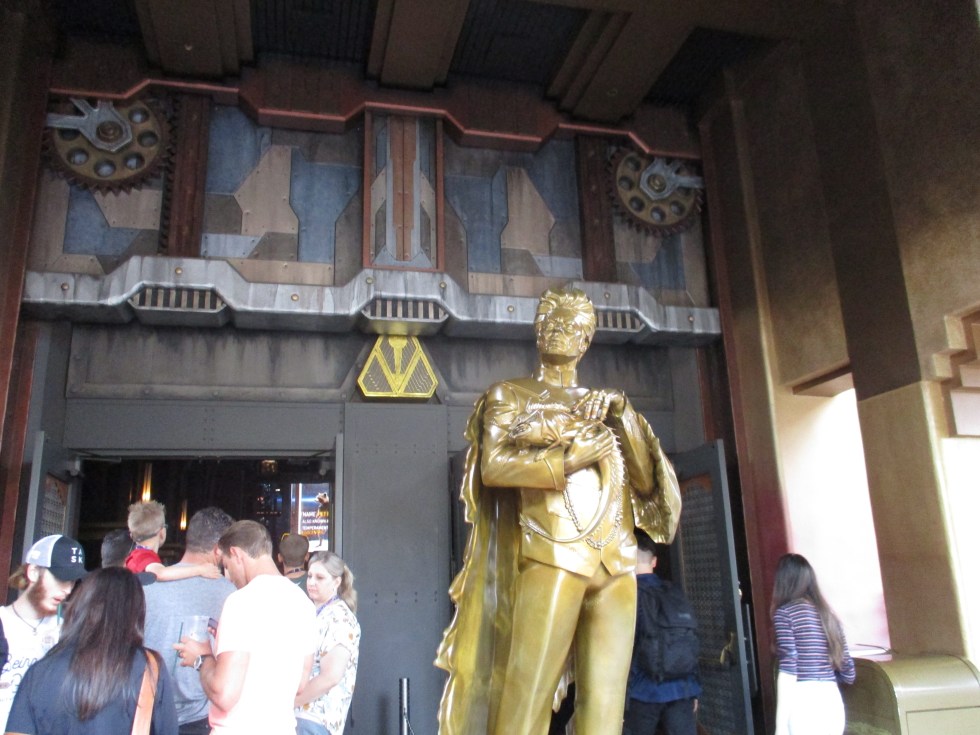
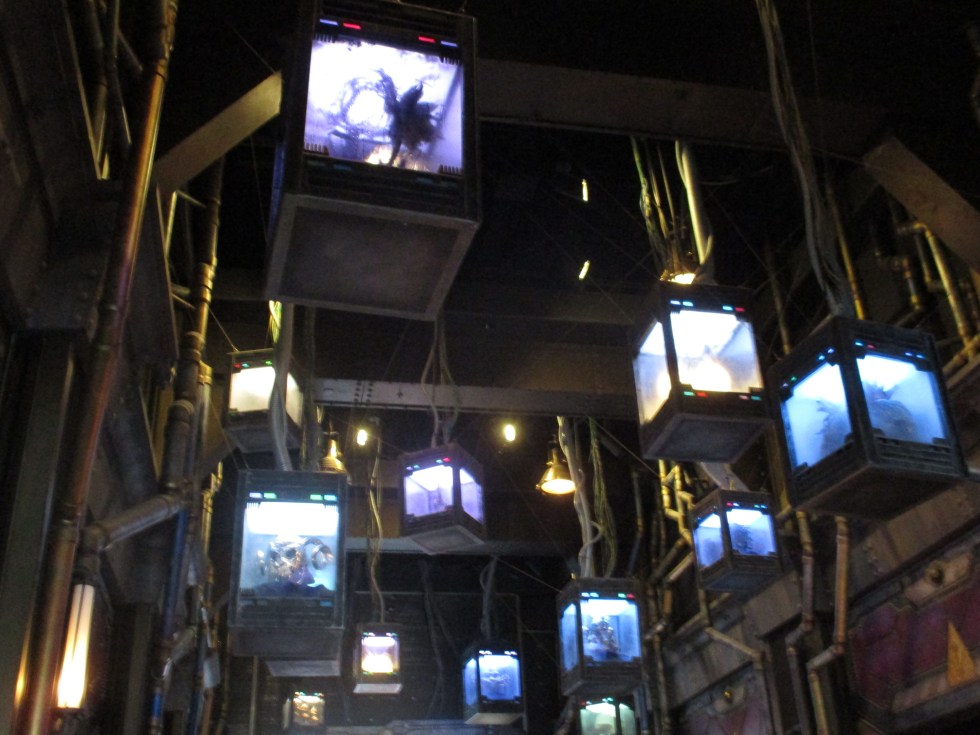
not California. In 2017, the Guardians of the Galaxy took over the Twilight
Zone Tower of Terror and, in one fell swoop destroyed the themes of Hollywoodland,
Grizzly Peak Airfield and Buena Vista Street. These are both popular and fun
attractions, but popular and fun aren’t a theme, and the original versions were
just as popular and fun.
Pixar Pier
In 2018, Paradise Pier became Pixar Pier. Pixar isn’t a
theme. It’s a collection of (if the Internet is to believed) vaguely related
films with different settings. Even if Pixar properties were relegated to Pixar
Pier, the them wouldn’t work. Mixing the superheroes of “The Incredibles,” the
shrinking you down to toy size of Midway Mania and Jessie’s Critter Carousel,
and the Inside/Out characters of the mind isn’t a theme; it’s a cacophony. Add
to it that Mickey’s Fun Wheel and Flik’s Flyers just received paint jobs, with
no significant changes otherwise, to go along with the Pixar theme and it looks
like Disney has just decided to throw in the towel. They probably could’ve left
Flik’s Flyers alone since it was a Pixar film and the theming would’ve worked
with Midway Mania, but “A Bug’s Life” has other problems when it comes to theme
parks.
Leftovers from Paradise Pier, the Golden Zephyr and Jumpin’
Jellyfish make no sense in terms of theming. They aren’t related to Pixar or
Disney characters and only represent the former California Beachside aesthetic.
With all of the incohesive changes, Disney California Adventure doesn’t really
celebrate Disney or California. Instead, it focuses on providing Pixar a place
to put its movie franchises. Things won’t be much better when Marvel joins the
scene with its own land. Marvel Land will be able to adopt Guardians of the
Galaxy, but this will leave the Red Car Trolley out in the cold and gut the
main attractions of Hollywoodland – the Marvel Meet and Greets.
This mishmash of rides and attractions keeps DCA from
achieving greatness through theming. Instead it’s a great example of what
Disneyland never wanted to be – an amusement park (except DCA is clean and the
cast members are friendly).
Why Bug’s Land Had to Change
While the new Marvel Land may not fix DCA’s theming, it does
address another relatively small problem: the relevancy of A Bug’s Land. Based
on the 1998 Pixar film “a bug’s life,” the land opened in 2002. The land itself
was made to be attractive to the younger set, except the 4D film experience “It’s
Tough to Be a Bug,’ which was terrifying for some adults. It’s environmental
and educational feel was a welcome respite from some of the larger areas of the
park, but there was no way these bugs could survive.
The film itself was not one of Pixar’s best. It earned $363
million at the box office, but without a sequel, TV shows, or a cuddly, iconic
character, the film has no relevance to today’s children. How many people even
remember the film without confusing it for “Antz”? Disney’s classic animation
fare has been able to remain relevant through marketing (specifically, the creation
of the Princess line, which keeps all of the princesses in the public light as long
as new princesses are added every couple of years or so) rereleases and remakes.
These movies hold up even through the changing times, and the theming of the
lands act as a crutch.
Attractions at Disneyland also remain relevant through the
sheer size and scope. The Haunted Mansion, Pirates of the Caribbean, Splash
Mountain, and Big Thunder Mountain Railroad are iconic, beloved attractions
that create their own atmosphere and fans. Flik’s Flyers? Tuck and Roll’s Drive
‘Em Buggies (which were not bumper cars)? Francis Ladybug Boogie… Does anyone
even remember this ride? These were all rides with no real creation to them and
without a Dumbo to keep them aloft. Only Heimlich’s Chew Chew Train seemed to
make an effort to provide something akin to a new place to visit.
With nothing new on the bug front, DCA needed to come up with something new. Marvel provided the answer. As long as they stay away from the now deceased Iron Man, the land will remain relevant for the next few decades.
World of Color’s and Incredicoaster’s Footprints
The World of Color, which debuted in 2013, is arguably the
best show in DCA. The fountains are spectacular, the water screens are amazing,
the pyrotechnics are amazing, and the show is flexible enough to be changed
almost on the fly to advertise new movies subtly and include new animated
sequences. One Christmas show featured the magic of snowflakes a foot in
diameter that floated up into the sky. Even the dining options and the viewing
areas that go with them are incredible.
The investment in the equipment that Disney made and the
popularity of the show make changing the venue area around the show basically
impossible. Imagineers are constrained by the World of Color’s space needs.
Just as constraining is the space required for a lesser
attraction, the now-called Incredicoaster. Wait times for this attraction hover
around 25 minutes, but it is still large enough and technically advanced to
warrant protection by the bean counters. It’s change over from California
Screamin’ is also an advance in storytelling, especially when it comes to
roller coasters.
By Any Other Name
When it first opened, the park was called Disney’s California Adventure. Ironically, it didn’t include Buena Vista street, but was more the company’s interpretation of what California was. Wine country, the Bay Area, the Redwoods, these were all represented. Yes, critics wondered why people would want to see the Disney version of the Golden Gate Bridge when it was just a seven-hour drive up north or a 2-hour flight. Still, that’s what Michael Eisner and his team came up with.
It changed its name to Disney California Adventure in 2010. Linguistically,
this could mean that this park is an adventure in California Disney-style. Something
along the lines of “have yourself a Disney California Adventure.” It doesn’t
have to have the California theming in order to work, except it’s already
associated with its first incarnation, and the California parts haven’t been
drummed out of it. Choosing another name might work better as far as managing expectations,
but it doesn’t change the fact that the park has no cohesive theming.
People come to Disneyland and its related theme parks for the cleanliness, the wonderful cast members and the theming. In its effort to cash in on its acquired IP, the Disney Company has forgotten about the theming at least as far as Disney California Adventure is concerned. Maybe they’ll get it fixed sometime in the future, but for now DCA will suffer from its continued lack of relevance and inability to inspire people to come for more than a day.
It’s our turn for Blue Sky thinking! What could Disney do to
make California Adventure better?
The Walt Disney Company traditionally rereleased its
animated classics to theaters about once every seven years. Even as video
cassettes were becoming popular, Disney kept its animated classics “in the
vault” and off the shelves. Rereleasing films was profitable because Disney
could fill out its movie slate for the year with a film that had no additional
production costs. The money from the rereleases was almost pure profit minus
the advertising budget.
With pent-up adult demand for something from childhood that
they could share with their children and the importance of introducing the
characters to a whole new generation that would then want to see those
characters in the parks, Disney’s rereleases were more than just profitable.
They kept the company in the news, and they made the attractions in the parks
more relevant to children who otherwise wouldn’t have seen the movies.
The rereleases, in essence, drove profits at the box office
and at the parks, especially during some of the Walt Disney Company’s rougher
periods. It wasn’t enough.
When Michael Eisner took over the company, things changed
drastically as he followed through on Ron Miller’s (the then defunct CEO) plan.
For the first time, Disney classics would be available in their entirety on VHS.
The video series reaped immediate cash rewards and provided a much need capital
input into the company while possibly sacrificing future profits and relevancy
in the process.
Eventually, Disney would return videos “to the vault.” The
announcement would increase demand for the videos because they would no longer
be available for purchase though they would remain on video rental store
shelves until the videotapes wore out. Videos would also be released in
different versions and levels, including Masterpiece, Gold Series and Platinum
series. This strategy kept the profits flowing while also keeping the films and
their characters relevant. It still wasn’t enough.
To drive further interest in its intellectual property and
keep the park characters relevant, Disney offered up direct-to-video sequels.
Unable to rerelease the classics to movie theaters on a wide scale, (Who would
go see “Snow White and the Seven Dwarfs” on the movie screen when they could
stay at home and see the same movie with the family at a much cheaper price?) the
new videos were often inferior in quality and storytelling, but they were effective
for the price and benefits reaped. On television, other characters made it to
Saturday Morning. “Tailspin,” based on the Jungle Book characters, and “Timon
and Pumbaa”, based on the Lion King characters, were relatively successful and
kept the spirit of the shows (and their related tie-in profits) alive.
Still, Disney needed a way to produce box office profits and
buzz with as little risk as possible. Remaking the classics has accomplished that
in spades.
In 1994, Disney had a moderate hit ($44 million) with a live
action “The Jungle Book” starring Jason Scott Lee, Cary Elwes and Lena Headley.
In 1996, it had a much more successful live action film ($320 million) in the Glenn
Close vehicle “101 Dalmatians.”
While some may classify Tim Burton’s “Alice in Wonderland”
as a remake, it is really a retelling. It has many elements similar to the
animated classic but is different enough to rate its own story. Still, it’s $1
billion box office take certainly didn’t deter Disney from the remakes. “Maleficent”
($758 million) is another live action film, based on Disney’s telling of “Sleeping
Beauty,” but still different enough to be its own story. Even “Pete’s Dragon” didn’t
stick strictly to the script of the original. “Christopher Robin” (not quite
$200 million) and “Dumbo” ($352 million on a $170 million budget – whoever authorized
that budget didn’t understand why the firs was released) had different
storylines compared to the originals and were considered flops as they didn’t
score highly with critics or at the box office.
“The Jungle Book” (2016), which almost made $1 billion,
featured groundbreaking cinematography and stuck close to the original animated
feature. “Beauty and the Beast” was a lot like the original, too, and this may
be the beginning of the downfall because it brought in $1.2 billion. Why write
a new script if you can just use the old one?
Enter the ultra-busy actor, producer, executive producer, director,
chef and whatever else Jon Favreau. Favreau is responsible for directing “Iron
Man” and for starring as Happy in several of the Marvel films. He’s taken part
in the “Star Wars” movies and shows Disney has/is creating. He is also the producer
and director of “The Lion King” and “The Jungle Book” (2016). He made a cooking
show in his spare time “The Chef Show” because he missed the time that he spent
with the chef that taught him how to cook on his movie “Chef.” Look up his IMDB
and be amazed, and then understand the problem.
Favreau’s box office dominance isn’t in question. His
ability to be original is. When someone is so busy with as many projects as he
is, it’s inevitable that he or she will take the easiest road. Adapting “the Lion
King” from the old script and giving it originality, in addition to wrangling
the photo-realistic “not” animation, would’ve have been too much if it were the
only project on his plate. After all, “The Lion King” made almost $1 billion.
More importantly, it’s beloved by millions of fans the world
over. If he had messed it up by taking a risk to make it more original, he
would’ve seen his career with Disney take a dive. Favreau had no choice but to
fulfill expectations and keep the animals looking live-action rather than
animated. Follow the script and no one gets hurt, except those parts that
living animals couldn’t literally do – like dress in drag and do the hula or
march in fascistic fashion.
Favreau was out in a no-win situation. In order for the “not”
animated “Lion King” to have been a better film, he would’ve needed to cut some
of the fluff (literally and figuratively) out of the film while concentrating
on character and using human expressions to get the animals to show emotion. He
would’ve needed to take a risk in the same way that the gorgeous and expensive
Broadway show took a risk. He would’ve needed to lead the innovation and story
team to bring something new to the screen that would’ve added to the film’s
legacy. He didn’t have the time to do what he needed to do to make the film
better, so rather than create something new, he took the safe road to
profitability. And we’re all creatively the worst for it.
“Cleaning the Kingdom: Insider Tales of Keeping Walt’s Dream Spotless” is a detail-oriented explanation of what it is like to be a member of Disneyland’s highly touted and highly effective custodial team. Ken Pellman and Lynn Barron tell great stories in bite-sized chunks that make this an easy and entertaining read, especially if you have any sort of connection to Disneyland throughout the 1990s and early 2000s. They don’t shy away from more difficult topics, like vomit, slacking or death. They give an honest appraisal of what it was like to work at Disneyland.
One of my friends say that he was waiting for the Bollywood
version of Disney’s Live Action “Aladdin,” and it’s a brilliant idea. After
all, isn’t that where movies in the cinema should be headed? By filming
different versions of the film with the same actors and changing parts of the
film to elicit greater responses in different cultures, movie companies could
reap millions of more dollars. And the Disney Company has already set the
precedent with Captain America: Winter Soldier.
Steve Rogers has a list of things he needs to learn about,
and it was different depending on where the film was viewed. Of course, it didn’t
remain a secret, and fans posted the lists online, which garnered more free
publicity for the film. Did it lead to more views? Who knows, but it certainly
showed that film companies could alter movies based on different audience expectations.
So, a Bollywood Disney’s “Aladdin” doesn’t have to be a cheap imitation. The film already showed that its actors could dance, and it had random musical numbers inserted into it. All that would’ve had to happen is for the script to be adapted to Bollywood styles, and Disney has the assets in India to do that. Sure, Disney missed out on pioneering in the movie world this time. Maybe, they’ll do better next time.
For more on the Disney company including “Frozen 2” plots that Disney probably never considered, get “Penguinate! The Disney Company.”
The second gate at the Disneyland Resort continues to
perform poorly and disappoint guests. With three-day, single park passes
costing around $100 per day, it makes sense for most guests to skip Disney California
Adventure (DCA) altogether – especially if they are on a budget.
While there are several problems with DCA, the most glaring is the problem of theming, and the problem is easily illustrated with one photo. Taking the photo from Grizzly Peak Airfield toward the Carthay Circle Theater, the Guardians of the Galaxy Mission: Breakout towers in the background and creates a dissonant sight line that doesn’t make sense in the theme park context.
Walt Disney thought that controlling sightlines was
important enough that he built a berm and planted trees on top of it to keep
people from seeing what was outside the park. The Walt Disney Company has repeatedly
lobbied the Anaheim City Council to keep other hotels from rising above certain
heights, so that they can’t see in and they can’t be seen from the park. The
Jolly Holiday Café was built with two styles of roofs – one to fit the
aesthetic of Main Street, U.S.A. and one to fit the theming of Adventureland.
Disneyland and its progeny have all been about theming when
they work. The current regime seems to have forgotten its company history and
the innovations that it brought to amusement parks. Theming is Disney’s strongest
characteristic. They use it to keep stories cohesive, and they should be using
it to keep the stories of their parks understandable.
With Pixar all over DCA and not just on the pier and the
Little Mermaid’s huge fin- or footprint (depending on the part of the story you’d
like to reference) on the opposite side of the pier, Disney California Adventure
has a theme problem. Its name no longer matches its content, and it’s been caught
in a no man’s land of California references that don’t fit in the Cars landscape,
the impending arrival of Tony Stark’s Marvel land, which will likely
incorporate the now poorly placed Guardians of the Galaxy attraction at least
in name and zone, or many of its other attractions.
It’s time for the Disney Company to let it go and speed up
the retheming of the park, which will necessarily include getting rid of Buena
Vista Street and Hollywoodland, which is currently the default play place for Marvel
superheroes, Monsters, Inc, and Mickey’s Philharmagic – none of which actually
represent the heyday of Hollywood and together they present a dissonance that
does the park more harm than good.
Even with a 90-minute wait at Radiator Springs Racers and
not using any FASTPASSes, my wife and finished the park between the hours of 9
am and 6 pm. We didn’t ride the Incredicoaster (She doesn’t like loops) or
Goofy’s Sky School. We also skipped all of the rides, we could find almost
everywhere else – Ferris wheel, giant swings, the Zephyr…
Our 6 pm departure was facilitated by the lack of good,
moderately priced food choices in the park. Corn dogs, hot dogs, and hamburgers
get old. The Pacific Wharf Café and the nearby Mexican and Chinese restaurants
weren’t appealing, and the pasta at the end of the pier just hasn’t ever been
that great.
You can still find spectacular shows like “Frozen” and “the
World of Color.” When you’re not on a budget and you’ve made reservations, the
Carthay Circle and Wine Country Trattoria are still two of the best restaurants
in the parks. For those of us that are on a budget, Disney California Adventure
isn’t worth the price of admission. I keep hoping, but it looks like it’ll be
another two decades before the park finds its footing – if it ever does.
















 Penguinate! Positive Creativity