Perhaps the most famous story involving X. Atencio and his
creativity comes from his work on the Pirates of the Caribbean. In an interview
with ParkHoppinPartyGuys, Atencio said that he was brought in by Walt Disney to
write the script for the attraction. Atencio had no experience writing scripts,
but he said “All right, Walt, whatever you say.” He wrote the auction scene
first and showed it to Walt, who told him to continue. However, this wasn’t Atencio’s
last or most well-known first.
At the last script meeting, Atencio said he thought that the
pirate attraction needed a song. He told Walt his idea, and Walt thought it was
great. He said do the music with George Bruns. Atencio had never written a song
before, but he came up with “Yo Ho (A Pirate’s Life for Me).”
His next Disneyland project was the Haunted Mansion. He worked with Marc Davis and Claude Coats to come up with a script. He also wrote “Grim Grinning Ghosts.”
When someone asks you to do something outside of your
comfort zone, especially if it’s creative, do what X. did, say “yes” and get to
work.
You can also find more articles about Disney, Disneyland and creativity at our archive website, www.penguinate.weebly.com, and on our blog. If you would like to get even more articles about creativity, join our Patreon and become a Penguinator.
As a Penguinator, does it make sense to be critical of
Disney California Adventure (DCA)? No one at the Disney Company is likely to
read this post and think, “Oh, yeah, we did forget that,” or “Schnikey! We need
to fix that ASAP,” especially if I were to leave this post private and for
Penguinators only instead of giving you an advanced viewing opportunity. I
don’t have any Disney employees on my Patreon list that I’m aware of, and I’m
decently certain there aren’t any that visit my blog. Even if there were, the
company is notorious for not accepting unsolicited ideas from outside.
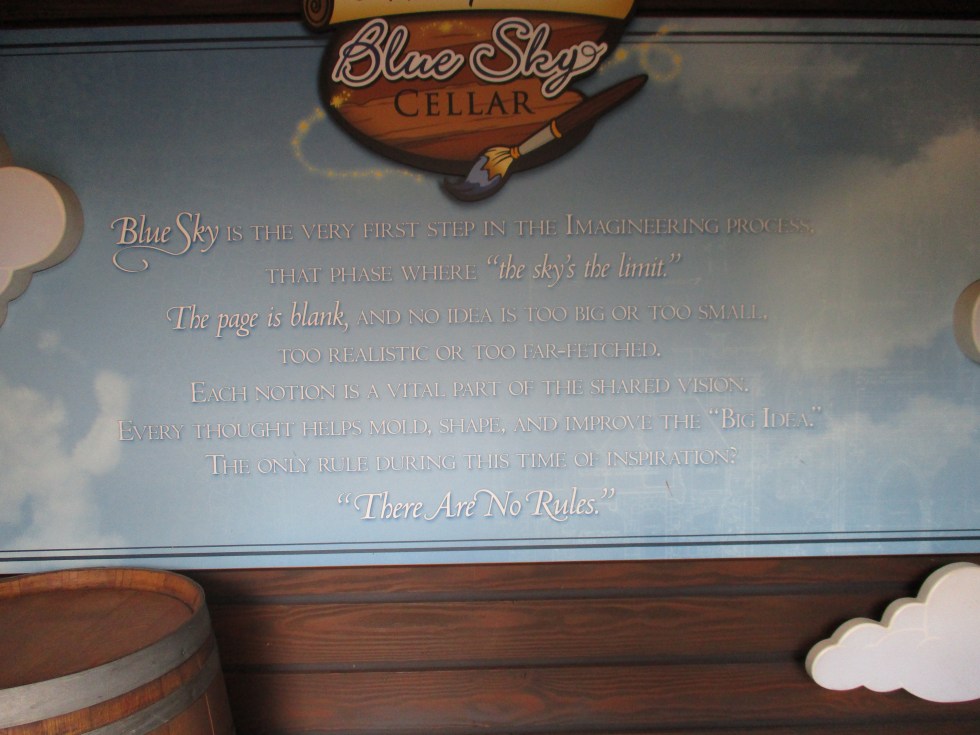
Besides, anything I say has already been said by someone else and probably thought of by the imagineers. Still, as a mental exercise to improve creativity, looking at DCA provides the opportunity to unleash the judge, find what’s wrong with the current park, and figure out how to make it better. Imagineers can talk about the idea of Blue Sky thinking where everything goes and there are no rules, but in the end, they are constrained by the park’s current footprint and the bean counter’s budget, which would include the opportunity cost of any major renovation that would significantly change the park. We have no similar constraints if we choose to offer up possible solutions to the DCA problem. We can truly engage in Blue Sky thinking without reference to financial consequences, thinking only about what’s wrong with DCA and what would make the park better.
Where’s the Theme, Park?
Disneyland changed the amusement park industry by, among
other things, theming itself and its lands. Walt Disney established early on
that spacemen and cars don’t go into Frontierland, and the cowboys stay out of
Tomorrowland. The sightlines were created so that people viewing a building on
Main Street, U.S.A. would see a different roof than they would see when viewing
the same building from Adventureland.
The berm with its train and trees was devised to keep the
rest of the world from interfering with the guests’ ability to suspend
disbelief. When coupled with the negotiated rules that Anaheim passed for
buildings outside the park, guest don’t see anything that Disney doesn’t want
them to see (beyond the occasional plane or helicopter flying overhead). Even
with Tomorrowland’s current shortcomings (there are plenty of them) and the
addition of Star Wars: Galaxy Edge, Disneyland is all about theming – right
down to the dolls making the popcorn in the popcorn carts.
As ill-conceived as it may have been to put a theme park
about California in California when a majority of Disneyland visitors are from
California, DCA was themed appropriately when it opened. The Sunshine Plaza was
upbeat and California themed through and through. Hollywood Backlot Studios had
the glamour of the 1930s. Golden State celebrated the architecture of the Bay
Area, and Paradise Pier took its cue from the Beach and Boardwalk parks. Condor
Flats took on California’s aviation history, and Grizzly River Peak with the
neighboring Redwood Trail were a tribute to California’s north. The park may
not have been good when it opened, but it was themed.
Unfortunately, the theme wasn’t the right one, and the
Disney Company had to come up with ways to get people to spend their money to
go over to their second gate. Bug’s Land was added to appeal to youngsters. Not
really California themed, but it didn’t intrude on the rest of the park, and
there were bug’s in California. “Twilight Zone Tower of Terror” was built in
the backlot; the perfect place for it. As a hotel from Hollywood’s glamor days
of the late 1930’s, the Tower of Terror fit in with the rest of the theme.
When “Monsters, Inc.: Mike and Sulley to the Rescue” opened
in 2006, it signaled the beginning of the end for DCA’s theming. Placed in
Hollywood in the same area as the defunct Superstar Limo ride that lasted less
than a year; Mike and Sulley weren’t (and still aren’t) Hollywood themed. Still
the monsters occupy a prominent place in Hollywoodland as one of the two rides
in the area – the other one being the Tower of Terror.
In 2008, Paradise Pier saw the opening of the beloved Toy
Story Midway Mania. Set within the games of the pier, Midway Mania could be
forgiven its intrusion; even if its story, guests being shrunk down to the size
of toys so they could play the game, didn’t fit with the theme, the game
element of the attraction worked. With Mr. Potato Head playing the Midway Mania
Barker, the Toy Story characters didn’t do much to detract from the theme
though no self-respecting boardwalk would have such a sophisticated game during
the time that Paradise Pier was supposed to reflect. (And let’s face it, Midway
Mania is one of the best attractions in either park.)
Other rides on Paradise Pier were rethemed over the next
three years to include Disney characters. Mickey’s Fun Wheel received a new
paint job and a giant Mickey Head. The Orange Stinger became the Silly
Symphonies Swings and Mullholland Madness became Goofy’s Sky School. Within the
singular concept of the ride, the retheming of the last two was brilliant. The
Silly Symphony Swingers opens up to reveal a painting of Mickey Mouse
conducting the band from “the Band Concert,” which isn’t from the Silly
Symphony series (highlighting the theming problem again). Still, the use of the
whirlwind cartoon on the swings support pole is a great idea. Goofy’s Sky
School is just “plane” fun. The problem is that none of the changes align with
the area’s theming at the time, and these rides are exactly that – rides – not
attractions. These are off-the-shelf, experience-them-at-your-local-carnival
rides.
While hyped tremendously as a new attraction for the park, Ariel’s Undersea Adventure quickly became DCA’s version of Snow White’s Scary Adventure. At seemingly twice the size and half the fun, this show-stopping, audio-animatronic disappointingly doesn’t carry the story far enough or strongly enough. Still, it’s routinely 5-minute wait time makes it a nice place to take a break from the heat, and it features some interesting advances – the descent into the sea and the Ursula figure. It’s still in the wrong place. The Little Mermaid has nothing to do with California or Paradise Pier.
In 2012, DCA attempted to keep with the California theming
and connect to its mythical beginnings. Missing a golden opportunity to
capitalize on its largest changes, the park turned the Sunshine Plaza into
Buena Vista Street of 1923, the time when Walt Disney arrived in California
with a suitcase and a dream. The Carthay Circle Theater was opened and fit in with
the Tower of Terror in the background, but Cars Land with its decidedly Arizona
feel debuted at the same time. Arizona isn’t California. How is Cars Land a
part of the California Adventure? It’s not, thematically speaking.
In 2016, the popular Soarin’ Over California was replace
with Soarin’ Around the World. California is not the world, and the world is
not California. In 2017, the Guardians of the Galaxy took over the Twilight
Zone Tower of Terror and, in one fell swoop destroyed the themes of Hollywoodland,
Grizzly Peak Airfield and Buena Vista Street. These are both popular and fun
attractions, but popular and fun aren’t a theme, and the original versions were
just as popular and fun.
Pixar Pier
In 2018, Paradise Pier became Pixar Pier. Pixar isn’t a
theme. It’s a collection of (if the Internet is to believed) vaguely related
films with different settings. Even if Pixar properties were relegated to Pixar
Pier, the them wouldn’t work. Mixing the superheroes of “The Incredibles,” the
shrinking you down to toy size of Midway Mania and Jessie’s Critter Carousel,
and the Inside/Out characters of the mind isn’t a theme; it’s a cacophony. Add
to it that Mickey’s Fun Wheel and Flik’s Flyers just received paint jobs, with
no significant changes otherwise, to go along with the Pixar theme and it looks
like Disney has just decided to throw in the towel. They probably could’ve left
Flik’s Flyers alone since it was a Pixar film and the theming would’ve worked
with Midway Mania, but “A Bug’s Life” has other problems when it comes to theme
parks.
Leftovers from Paradise Pier, the Golden Zephyr and Jumpin’
Jellyfish make no sense in terms of theming. They aren’t related to Pixar or
Disney characters and only represent the former California Beachside aesthetic.
With all of the incohesive changes, Disney California Adventure doesn’t really
celebrate Disney or California. Instead, it focuses on providing Pixar a place
to put its movie franchises. Things won’t be much better when Marvel joins the
scene with its own land. Marvel Land will be able to adopt Guardians of the
Galaxy, but this will leave the Red Car Trolley out in the cold and gut the
main attractions of Hollywoodland – the Marvel Meet and Greets.
This mishmash of rides and attractions keeps DCA from
achieving greatness through theming. Instead it’s a great example of what
Disneyland never wanted to be – an amusement park (except DCA is clean and the
cast members are friendly).
Why Bug’s Land Had to Change
While the new Marvel Land may not fix DCA’s theming, it does
address another relatively small problem: the relevancy of A Bug’s Land. Based
on the 1998 Pixar film “a bug’s life,” the land opened in 2002. The land itself
was made to be attractive to the younger set, except the 4D film experience “It’s
Tough to Be a Bug,’ which was terrifying for some adults. It’s environmental
and educational feel was a welcome respite from some of the larger areas of the
park, but there was no way these bugs could survive.
The film itself was not one of Pixar’s best. It earned $363
million at the box office, but without a sequel, TV shows, or a cuddly, iconic
character, the film has no relevance to today’s children. How many people even
remember the film without confusing it for “Antz”? Disney’s classic animation
fare has been able to remain relevant through marketing (specifically, the creation
of the Princess line, which keeps all of the princesses in the public light as long
as new princesses are added every couple of years or so) rereleases and remakes.
These movies hold up even through the changing times, and the theming of the
lands act as a crutch.
Attractions at Disneyland also remain relevant through the
sheer size and scope. The Haunted Mansion, Pirates of the Caribbean, Splash
Mountain, and Big Thunder Mountain Railroad are iconic, beloved attractions
that create their own atmosphere and fans. Flik’s Flyers? Tuck and Roll’s Drive
‘Em Buggies (which were not bumper cars)? Francis Ladybug Boogie… Does anyone
even remember this ride? These were all rides with no real creation to them and
without a Dumbo to keep them aloft. Only Heimlich’s Chew Chew Train seemed to
make an effort to provide something akin to a new place to visit.
With nothing new on the bug front, DCA needed to come up with something new. Marvel provided the answer. As long as they stay away from the now deceased Iron Man, the land will remain relevant for the next few decades.
World of Color’s and Incredicoaster’s Footprints
The World of Color, which debuted in 2013, is arguably the
best show in DCA. The fountains are spectacular, the water screens are amazing,
the pyrotechnics are amazing, and the show is flexible enough to be changed
almost on the fly to advertise new movies subtly and include new animated
sequences. One Christmas show featured the magic of snowflakes a foot in
diameter that floated up into the sky. Even the dining options and the viewing
areas that go with them are incredible.
The investment in the equipment that Disney made and the
popularity of the show make changing the venue area around the show basically
impossible. Imagineers are constrained by the World of Color’s space needs.
Just as constraining is the space required for a lesser
attraction, the now-called Incredicoaster. Wait times for this attraction hover
around 25 minutes, but it is still large enough and technically advanced to
warrant protection by the bean counters. It’s change over from California
Screamin’ is also an advance in storytelling, especially when it comes to
roller coasters.
By Any Other Name
When it first opened, the park was called Disney’s California Adventure. Ironically, it didn’t include Buena Vista street, but was more the company’s interpretation of what California was. Wine country, the Bay Area, the Redwoods, these were all represented. Yes, critics wondered why people would want to see the Disney version of the Golden Gate Bridge when it was just a seven-hour drive up north or a 2-hour flight. Still, that’s what Michael Eisner and his team came up with.
It changed its name to Disney California Adventure in 2010. Linguistically,
this could mean that this park is an adventure in California Disney-style. Something
along the lines of “have yourself a Disney California Adventure.” It doesn’t
have to have the California theming in order to work, except it’s already
associated with its first incarnation, and the California parts haven’t been
drummed out of it. Choosing another name might work better as far as managing expectations,
but it doesn’t change the fact that the park has no cohesive theming.
People come to Disneyland and its related theme parks for the cleanliness, the wonderful cast members and the theming. In its effort to cash in on its acquired IP, the Disney Company has forgotten about the theming at least as far as Disney California Adventure is concerned. Maybe they’ll get it fixed sometime in the future, but for now DCA will suffer from its continued lack of relevance and inability to inspire people to come for more than a day.
It’s our turn for Blue Sky thinking! What could Disney do to
make California Adventure better?
Vision can be the way you perceive things. No one sees the
world exactly like you. Your life experiences have given you a unique way of
viewing situations. The only way that anyone can begin to understand what you
see in the world is if you share your vision.
A vision can also be the goals that you want to achieve or
the way you see the future. You might look toward a utopia. You might see
problems with the drainage system and possible solutions. You might have the
key to opening up a new discipline. But this only happens after you develop
your vision and show it to people. If you aren’t able to tell people about what
you want to achieve on a grand sale, you are unlikely to achieve it.
You can use your vision to drive toward your vision, and creativity should be an important part of that drive. Walt Disney saw that there were no places where adults could enjoy spending time with children. He sat eating peanuts while his daughters took rides on the carousel in Griffith Park. His vision was a park that parents and children could enjoy equally together. Without either sense of vision, we wouldn’t have Disneyland or any of the other theme parks that came after it.
When Pamela Travers confronted Walt Disney about changes she
wanted to see in “Mary Poppins” after the film premiered, Walt Disney said, “Pamela,
that ship has sailed.” It was one of Walt’s frustration with film. Once it was
done, he could change it or tinker with it to make it better. It’s part of the
reason he created Disneyland; it gave him something he could change and
improve. You would think that the company’s live action – or in ‘the Lion King’s”
case, CGI animated – films would allow them to improve on the story.
You’d be wrong. Jon Favreau’s self-proclaimed live action “Lion
King” does nothing to improve up on the original and eliminates some of the
best parts of the 1994 classic. Was there nothing the filmmakers thought they
could improve upon?
The elimination of Ed the hyena who communicated through
laughter is one large change. It was Ed’s change from bumbling fool to evil,
backstabber that was the most frightening change in the original.
The “Be Prepared” sequence lacks the emotional impact that
the Jeremy Irons number had. The visuals and message in the original are
staggeringly relevant and scary. It may have been the best song in the movie.
Favreau’s animals are limited to the things that animals can
do. This necessitated a huge change to the visuals for the “I Just Can’t Wait
to Be King” number. There’s no Hula dancing meerkat, and staff-wielding Rafiki
is only revealed in a lackluster moment of no import. Rafiki pulls the staff
out of a hiding place in the tree and says, “My old friend.” There’s no connection
to this staff in the film, so this statement doesn’t serve a purpose, except as
fulfilling fan expectations. Seriously, you don’t need any fan appreciation
because it’s ALL fan appreciation.
I can respect that Favreau wanted to make these animals photo-realistic;
it’s something Disney tried to do with Bambi in 1940. But in doing so, Favreau
eliminated a lot of what makes the 1994 version a standout film. In fact, this
new version doesn’t even do justice to the stage play, which was truly
something new and fresh when it debuted – and it’s still a work of art.
The last battle between Scar and Simba has less drama than an
episode of “Mutual of Omaha’s Wild Kingdom” where the lions’ strength would be
on full display. Here, it comes off as “Man, this would be powerful if they
were real lions in the wild; instead, it’s artificially enhanced by sound
effects.”
In the past Disney released their animated films in the theater every seven years so new children could become acquainted with them. That worked for the new “Aladdin.” There were enough changes that it was clear the movie was released for the next generation. “The Lion King” just seems like it was developed because the original made a billion dollars. For those who love the originals, the 2019 version plays like “Phantom Menace” without a new plot line.
At about the 7-minute mark: Rolly and his Museum of the Weird.
Walt Disney assigned Rolly Crump to work with Yale Gracey on
the Haunted Mansion in 1959. Rolly maintains that he learned a lot from Yale
during their time together. They were given a room on the second floor of the animation
building, and they had a year to develop illusions specifically for the Haunted
Mansion.
Rolly came to Walt’s attention when Ward Kimball told Walt
about Rolly’s propeller sculptures. IN 1964, Rolly would apply his knowledge of
kinetic sculptures to the “Tower of the Four Winds” for the 1964-65 World’s
Fair.
Rolly’s Haunted Mansion concepts were considered too weird
by his fellow imagineers. Walt, however, thought they could be used in a
spillover area where guests could interact with a chair that talked, the
melting candleman, or a coffin-styled grandfather clock. Rolly also came up
with a concept for a haunted gypsy cart. Walt called it the “Museum of the Weird.”
The concept failed to materialize after Walt’s death.
Rolly and Yale were giving time and freedom to do what they
wanted with their day. The created the illusions that are part of one of the
most beloved attractions at Disneyland. Even though the Museum of the Weird
never materialized, Rolly’s willingness to try new things made him a great
imagineer. You can follow his example and try new things, too!
You can also find more articles about Disney, Disneyland and creativity at our archive website, www.penguinate.weebly.com, and on our blog. If you would like to get even more articles about creativity, join our Patreon and become a Penguinator.
Yale Gracey joined the Disney Company in 1939 as a layout
artist. He worked on “Pinocchio,” “Fantasia” and “the Three Caballeros.” In
1959, Walt Disney set Gracey up with Rolly Crump and gave them a large room on
the second floor of the animation building. They were instructed to come up with
effects for the Haunted Mansion.
As the son of an American Consul, Gracey grew up in various
places and had to learn to entertain himself. He filled his days with “Popular
Mechanics’ and the book set called “Boy Mechanic.” He also practiced magic.
Gracey had no formal training in special effects, but his
curiosity often led to him building miniatures to see if he could get an effect
to work. According to Bob Gurr (Kurtti, p. 72), Gracey was given the time and
space to tinker without deadlines, and Walt was fine with whatever new thing
Gracey invented.
Gracey projected the face of the Magic Mirror on everything
in the room one day. It led to the development of the Madame Leota effect
(Kurtti, p. 73). Gracey also put the Pepper’s Ghost effect to use in the
Haunted Mansion to create the Ballroom scene. Gracey died under mysterious
circumstances in 1983.
Gracey tried to do new things. He tinkered, and he followed
his curiosity. You can do the same thing. Follow your curiosity and create
something new.
You can also find more articles about Disney, Disneyland and creativity at our archive website, www.penguinate.weebly.com, and on our blog. If you would like to get even more articles about creativity, join our Patreon and become a Penguinator.
Ken Anderson was laid off by MGM in 1934. He was married and
spent a month “living on the beaches and eating canned beans and what-not” (The
Disney Family Album). He applied to the Walt Disney Company at the urging of
his wife Polly even though his education was in architecture. Anderson’s additional
accomplishments include work on “The Goddess of Spring,” “Ferdinand the Bull,”
and “Snow White and the Seven Dwarfs.”
Anderson was the first imagineer to really work on the
Haunted Mansion as an attraction. Harper Goff did a drawing of a haunted house
as part of the Mickey Mouse park Walt Disney was considering in 1951, and Marvin
Davis gave a haunted mansion a place in Disneyland that never materialized.
In 1957, Anderson wrote his first storylines for the Haunted
Mansion. He researched houses in the south and went to the Winchester Mystery
House to look at group movements and timings. His storylines included a captain/pirate
who killed his new bride, a ghostly family that kept the mansion from being
renovated, a tour led by Walt Disney, and a mansion that used the Headless Horseman
and the classic monsters of literature.
Anderson suffered a stroke after the release of “101 Dalmatians.”
He lost the ability to move and was left blind by the stroke. He had “absolutely
no control” over his body. He came back with the inspiration from a grove of
trees and worked on Shere Khan for “The Jungle Book.”
Ken Anderson worked for Disney for 44 years. He is one of
the few unsung heroes of the Haunted Mansion. Without his first treatments and
ideas for the inside, we may not have the classic attraction that exists today.
Let his example help you improve your work situation, perseverance and creativity.
You can also find more articles about Disney, Disneyland and creativity at our archive website, www.penguinate.weebly.com, and on our blog. If you would like to get even more articles about creativity, join our Patreon and become a Penguinator.
The Haunted Mansion was always my favorite Disneyland
attraction growing up. Sure, I enjoyed singing and clapping with the Country
Bears. I had fun sailing with pirates in the Caribbean, and I really loved
Adventures thru Inner Space. However, it was the Haunted Mansion and its magic
that remained the attraction I would choose to go on first.
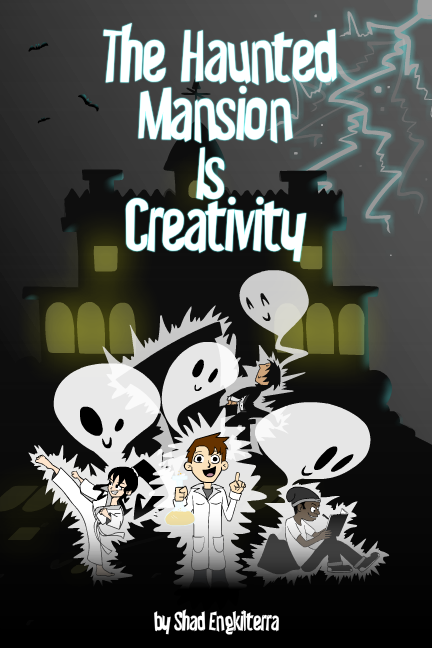
This year marks the Haunted Mansion’s 50th anniversary. Because of that, I wanted to delve deeper into its history and its links to creative principles. From the late 1950s when Ken Anderson was the only imagineer assigned to the project through to Yale Gracey and Rolly Crump’s shenanigans to opening day and beyond, “The Haunted Mansion Is Creativity” takes you on a tour of the home of 999 happy haunts linking attraction details and designs as well as stories of its creation to creative principles as revealed through scientific studies and interviews with people who create for a living.
When Walt Disney assigned Yale Gracey and Rolly Crump to the Haunted Mansion, he gave them time and space to play. Gracey and Crump were assigned to come up with ideas and effects for the Disneyland attraction. They would come into the studio and work on whatever they felt like. As Marty Sklar put it in the forward to Jason Surrell’s “The Haunted Mansion: Imagineering a Disney Classic,” “Yale and Rolly Crump, especially, were free to experiment, to try out their wildest haunting ideas… to ‘play ghost’ if you will.”








 Penguinate! Positive Creativity